Saturday, January 30, 2016

Text of the Presentation from the Cheikh Sālim b. Yaʿqūb Symposium | نص المداخلة من ملتقى الشيخ سالم بن يعقوب

Below is the short presentation I wrote for the recent symposium in honor of Cheikh Sālim b. Yaʿqūb in Djerba.

النص الآتي هو الذي كتبته لملتقى الشيخ سالم الثقافي في جربة

""
تمثّل المكتبات الإباضية الخاصة مصدرا هاما للغاية من ناحية الحفاظ على التراث الإباضي خاصةً والتراث الإسلامي عامةً وهذا ليس لأنّ المذهب الإباضي هو من ضمن أقدم المذاهب الإسلامية بما أنّه تبلور في أول قرنين هجريَيْن فحسب بل وإنما أيضا لأنّ المسلمين الإباضيين أخترعوا طرقا لكتابة التاريخ وتدوين الأحاديث النبوية وغيرها من الفنون الإسلامية استقلالاً إلى حدّ ما عن المذاهب الأخرى. حتّى النصوص الإباضية نفسها تستحفظ على روايات للأحداث التاريخية والآراء الكلامية والفقهية القديمة جدا. ولذلك، من المدهش أنّ أكثرية النصوص الإباضية ما زالت مخطوطات في خزائن خاصة، مخفية عن عيون الباحثين أو غيرهم من المهتمين بالتاريخ الإباضي والتراث الإسلامي. طبعا، توجد أسباب تاريخية جيّدة لبقاء المخطوطات مخفية من ضمنها خوف أصحابها عليها من الخرب أو السرقة وهذا خاصة بسبب تشويش آراء الإباضية عبر القرون في بعض الكتب السنية.

ولكنّ في آخر القرن التاسع عشر وبداية القرن العشرين الميلادَيْن، بدأت حركة مهمّة في مصر والمغرب العربي (معروفة بـ”النهضة الإباضية”) لتقديم الإباضية كمذهب من المذاهب الإسلامية اعتمادا على التكنولوجيا الجديدة: الطباعة. لعبت ديار النشر والطباعة في مصر وتونس والجزائر وزنجيبار دورا هاما في توزيع المعلومات حول تاريخ الإباضية من خلال نشر النصوص الإباضية المهمة مثل كتب السير والنصوص الفقهية الإباضية.
أما اليوم، فالظروف الحالية التي نعيش فيها توفّر لجماعات الإباضية في تونس والجزائر وليبيا الفرصة أن يحيوا من جديد هذه الحركة العلمية من أجل الحفاظ على تراثهم والتعارف والتفاهم مع إخوتهم المسلمين من المذاهب الأخرى.

لذلك نلاحظ اهتماما مجدّدا بالمخطوطات الإباضية التي توجد في المكتبات الإباضية الخاصة في وادي المزاب في الجزائر وفي جزيرة جربة في تونس. مع أنّ عدد المكتبات الخاصة في جربة لا يقارب عددها في الجزائر، ما زالت توجد مكتبات خاصة مهمّة للغاية في الجزيرة وتلك الأرصدة تعكس تاريخ جربة الغني بالعلم وثقافة المخطوطات من العصر الوسيط حتى القرن العشرين. لا شكّ أنّ المكتبة البارونية، على سبيل المثال، تعتبر من أهم المكتبات الإباضية في شمال إفريقيا. بالإضافة إلى هذه المكتبة المعروفة، توجد مكتبة أخرى في جربة تمثّل فترة مختلفة من تاريخ الإباضية وتاريخ الجزيرة ألا وهي مكتبة الشيخ المرحوم سالم بن يعقوب. هذه المكتبة تختلف عن الكثير من المكتبات الإباضية الأخرى في جربة وغيرها لأنّها تبلورت في سياق تاريخي خاص وظروف تكوين رصيدها تعطيها قيمة فريدة.

بعد الدراسة في تونس، سافر الشيخ سالم إلى مصر حيث عاش لعدّة سنوات في الوكالة الإباضية المعروفة بـ”وكالة الجاموس” أو “وكالة البحّار” القريبة من جامع ابن طولون في القاهرة. منذ تأسيسها في آخر القرن السادس عشر الميلادي، لعبت هذه الوكالة دورا مهمّا في استنساخ المخطوطات. توجد مخطوطات منسوخة في الوكالة في كثير من المكتبات في ليبيا وتونس والجزائر ومصر وعُمان. ولكن، أغلبيتها توجد في مكتبات عائلية موروثة عبر عدّة قرون بينما مكتبة الشيخ سالم هي ناجمة عن جهوده الدؤوبة وحدها. خلال سنواته في مصر، الشيخ سالم جمع الكثير من المخطوطات الإباضية القديمة وقام بنسخ مخطوطات أخرى بيده. بالإضافة إلى ذلك، سجّل الكثير من المعلومات الغنية حول وكالة الجاموس ومكتبتها الموقوفة التي ستكون ضائعة اليوم لولاه. ليس من باب المبالغة أن نقول إنّ تلك الوثائق وملاحظاته حول وكالة الجاموس المسجّلة في الدافتر تمثّل أهمّ مصدر لتاريخ وكالة الجاموس والجالية الإباضية في مصر لمدة أربع قرون.

بالنسبة للمخطوطات نفسها فهي أيضا تمثّل رصيدا هاما لتاريخ الإباضية تعكس حياة الشيخ سالم واهتماماته وحبّه لتاريخ فضلا عن احترامه للمخطوطات والعلم. نتيجةً لمشروع الحفاظ على هذه المخطوطات والاستطلاع عليها الذي قامت بها جمعية الشيخ سالم الثقافية خلال الخريف من العام الماضي (٢٠١٥)، يمكننا أن نقدّم بعض البيانات حول هذا الرصيد:

عدد المجلّدات المسفّرة ذي أغلفة: 14
عدد العناوين غير المسفرة الكاملة (أو تقريبا كاملة): 33
عدد الأوراق المفترقة ذي عناوين: 296
عدد الأوراق المفترقة بدون عنوان: 381

بعد تنظيم الأوراق المفترقة وفهرسة المكتبة بكاملها، ستكون صورة الرصيد ومضمون المكتبة أوضح. ولكنّ هذا العدد الكبير من المخطوطات يعكس جهود الشيخ سالم في الحفاظ على التراث الإباضي المخطوط. بالإضافة إلى عددها، هذه المخطوطات تحمل إمكانية كبيرة لتحقيق النصوص بما أنّ الشيخ سالم جمع الكثير من النسخ من نفس العناوين. مكتبة الشيخ سالم بن يعقوب مجرّد مثال واحد من هذا الدور الهامّ الذي تلعبه المكتبات الخاصة بالحفاظ على التراث والتاريخ المادي والمعنوي في جربة. المشروع الذي قامت به جمعية الشيخ سالم الثقافية هو الخطوة الأولى في تأكيد إمكانية الحفاظ على هذه المخطوطات لفائدة الطلاب والباحثين الإباضيين وغير الإباضيين في الأجيال القادمة فضلا عن الحفاظ على تاريخ جزيرة جربة الثقافي.

 ولكنّ النقطة الأخيرة هذه تذكّرنا بالخطر الجدي والحقيقي الذي تواجهه المكتبات الخاصة في الجزيرة اليوم. إذا استمرّ الناس في اخفاء المخطوطات في بيوتهم بدون أي مساعدة في تنظيمها أو فهرستها أو الحفاظ عليها من الرطوبة والحشرات، فهم يجازفون بفقدانها إلى الأبد. لذلك، نريد أن نختم هذه المداخلة بطلب المساعدة منكم في الحفاظ على المخطوطات في جربة. إذا عرفتم أصحاب مخطوطات أو كتب قديمة في الجزيرة، فشجّعوهم على الاتصال بجمعية صيانة الجزيرة أو المكتبة الوطنية أو باحث في التاريخ مختصّ بالمخطوطات لكي يحصلون على مساعدة في الحفاظ عليها. لولا مساعدة المختصّين، كلنا سنفقد هذه الوثائق الثمينة وهذه الشهود الفريدة على تاريخ الجزيرة وأهلها
""

Thursday, January 21, 2016

3rd Annual Conference in honor of Cheikh Sālim b. Yaʿqūb in Djerba | الملتقى الثالث لجمعية الشيخ سالم الثقافية في جربة

This coming Sunday, the 24th of January, will be the third annual conference in honor of Djerbian Ibāḍī scholar Cheikh Sālim b. Yaʿqūb (d.1991). Cheikh Sālim was an important figure in Ibāḍī history of the 20th century and this event combines personal narratives from those who knew him with academic talks on Ibāḍī history and archaeology. Unfortunately, I am unable to attend the event this year but will have a paper read in absentia. Following the event this weekend, I will post the short talk I wrote for the conference. The program for the event is available on the Association's Facebook page: here.

يوم الأحد الجاي (الموافق بـ٢٤ جانفي)، هناك الملتقى الثالث لجمعية الشيخ سالم الثقافية في حومة السوق في جزيرة جربة. كان الشيخ سالم شخصية مهمّة لتاريخ الإباضية في القرن العشرين وتشتمل هذه المناسبة ذكريات أصحابه معه بالإضافة إلى تقديمات إكاديمية حول التاريخ وعلم الآثار الإباضي. للأسف، لن أستطيع الحضور ولكنّي سأضع المداخلة التي كتبتها هنا في المدوّنة في أول الأسبوع المقبل. البرنامج للملتقى متواجد في موقع الجمعية في "فيس بوك" : هنا

Sunday, December 6, 2015

مكتبة البعطوري في جزيرة جربة | The Buʿṭūrī Manuscript Library in Djerba

Apologies for the delay in posting new material. For the past couple of months I have been working on a project with a private library in Djerba, the details of which will be forthcoming but the title of the project and the announcement can be found here.

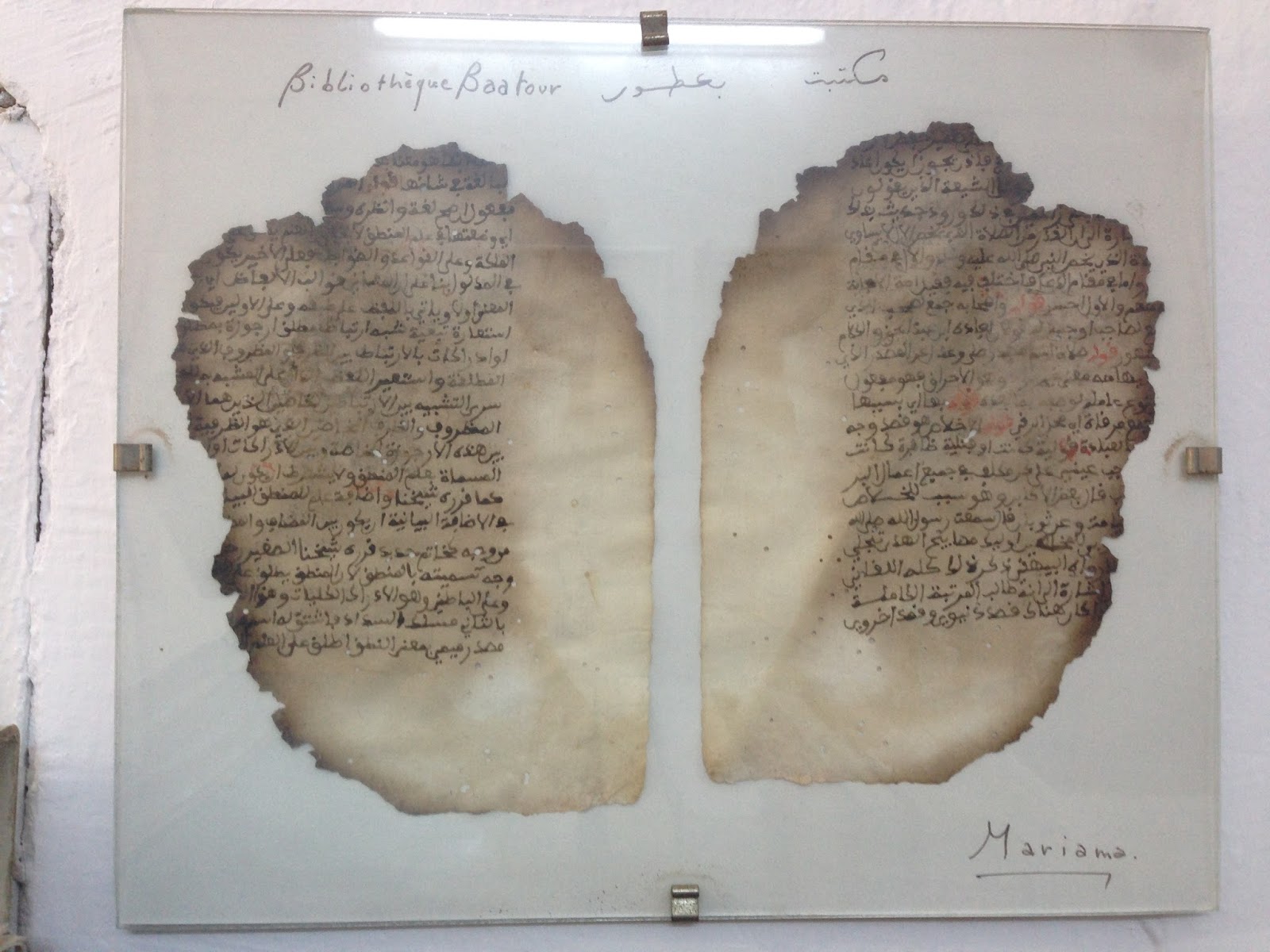
More immediately, I have been working on a study of a list of the contents of another library in Djerba, that of the al-Buʿṭūrī family, that was made in the late 1980s for an exhibition at the Association pour la sauvegarde de l'île de Djerba. Unfortunately this library's contents were destroyed in a fire. The historical importance of this library was great given its collection of Ibāḍī manuscripts, including the only known copy of the earliest written Ibāḍī work in the Maghrib known as the Kitāb Ibn Sallām. [1]

Fragments of a manuscript from the Buʿṭūrī Library

I am posting this announcement on the outside chance that someone who reads it might have some information on the history of this library, its foundation, its contents, or even a documented account of its destruction. If you happen to have any information, I would appreciate you sending me an e-mail at: paullove@umich.edu

More to come soon on the other project!


أعتذر للتأخر في وضع مقال جديد. منذ أشهر أقوم بمشروع حول مكتبة خاصة في جزيرة جربة ولم يكن لدي وقت للكتابة. ستأتي تفاصيل هذا المشروع فيما بعد ولكن الإعلان والعنوان موجود هنا.

بالإضافة، أشتغل على بحث حول مضمون مكتبة أخرى في جربة تدعى "المكتبة البعطورية" اعتمادا على قائمة من المخطوطات فيها دُوّنت في عام ١٩٨٧ في إطار معرض في جمعية صيانة جزيرة جربة. للأسف الشديد انحرقت هذه المكتبة. كانت أهمية هذه المكتبة التاريخية كبيرة نظرا لمخطوطاتها وكان أبرز مثال تلك الأهمية هو النسخة الوحيدة (المعروفة على الأقل) من أقدم كتاب إباضي في المغرب، كتاب ابن سلام [1] الذي تحقّق ونُشر في ١٩٨٦

أضع هذا المقال في الحالة أنّ لأحد القراة معلومات حول تاريخ هذه المكتبة  (تأسيسها أو مضمونها أو حتى قصة حرقها وثّقة). إن كانت لديكم معلومات للرجاء بعث رسالة إلكترونية:
paullove@umich.edu

وإن شاء الله ستأتي معلومات أكثر حول المشروع الحالي في المستقبل القريب

[1] The manuscript was edited and published by Werner Schwartz and Djerbian historian Cheikh Sālim b. Yaʿqūb as: Kitāb Ibn Sallām: Eine ibaditsch-maghribinische Geschichte des Islams aus dem 3/9 Jahrhundert. (Bibliotheca Islamica). pp.168. Stuttgart, Franz Steiner Verlag Wiesbaden GmbH, 1986.
 

Friday, October 30, 2015

30 Oct - 1 Nov: Second Annual Ibadi Siyar Conference in Tunis | الندوة الثانية حول السير الإباضية: تونس ٣٠ أكتوبر - ١ نوفمبر

A quick and last minute announcement about the second annual Ibadi Siyar conference being held here in Tunis this weekend.  More information here: http://www.elsyar.tn/

إعلان سريع بالندوة الثانية حول السير الإباضية في تونس في نهاية الأسبوع الحالية. بنامج الندوة وأكثر معلومات هنا http://www.elsyar.tn/


Sunday, September 20, 2015

مؤتمر حول "الماضيات العربية" | Conference on Arabic Pasts

I am currently preparing another post on Ibadi networks in the Maghrib, but for now I wanted to announce an exciting upcoming conference to be held next week in London on "Arabic Pasts." The conference is organized by the Aga Khan University, ISMC, and SOAS at the University of London. The schedule is to be found here. As you can see, there will be a presentation on Ibadi networks!

أنا حاليا أحضّر مقالا جديدا حول الشبكات الإباضية في المغرب ولكنّني أردت أن أعلن بمؤتمر مثير للاهتمام في الأسبوع القادم في لندن حول "الماضيات العربية." نُظم المؤتمر من قبل جامعة الاغا خان وكلية الدراسات الشرقية والإفريقية في جامعة لندن. البرنامج متواجد هنا. كما ترون، يوجد تقديم حول الشبكات الإباضية

Saturday, August 15, 2015

Unsewn Textblocks in Ibāḍī MSS | مخطوطات إباضية غير مخيطة

This post is the first in what I hope to make a series on Ibāḍī manuscript binding structures. A handful of important works have been published in the last few years on Islamic manuscripts and their bindings and these have been leading toward typologies for bindings, sewing, and other related components [1]. My hope is that in the near future, with more complete catalogs of Ibāḍī manuscripts (and many many more photographs!), this subset of the Islamic manuscript tradition will be better understood.

In many respects, North African Ibāḍī manuscripts share binding features with other manuscripts in the region. The vast majority of these communities' extant manuscripts date from the 15th century forward, with a large number dating to the 17th-19th centuries [2]. As such, they are often 'traditional' Islamic style bindings with full or partial-leather covers, well-known embossed pendant designs on there covers, envelop flaps, link-stitch sewing, chevron pattern endbands, and so forth.

This post highlights one less-common feature in the Islamic manuscript tradition that has shown up several times in my research on Ibāḍī prosopographical manuscripts: the unsewn textblock. The example shown here, along with  the other unsewn Ibadi manuscripts I have examined so far [3], comes from a private library in the Mzab valley in Algeria [4]. Also significant is that the unsewn manuscripts all appear to date to the 19th and 20th centuries.

The example manuscript comes from the private library of Āl Yaddar (آل يدر) in Benisguen, shelf-mark no.79 in the collection. The manuscript is a copy of the well-known Ibadi prosopographical work Kitāb siyar al-Shammākhī, dated 29 Rabīʿ al-Awwal 1283 [11 August 1866]. While the binding shares all the features of a traditional Islamic binding structure including the characteristic envelope flap, the interior of the spine shows no signs of having had a textblock adhered to it (see photo above). Of course, it's possible that the interior was recovered but having examining it in person I believe the lining to be original to the binding. (Even if it has been re-purposed, it is noteworthy that it was clearly prepared to protect a collection of unsewn quires). Secondly, the textblock appears to have been held together at some point with connective leather strips, rather than sewn (see photo). While the straps are no longer there, traces can be seen on the spine of the unsewn block. The manuscript shares this feature with other early-modern Islamic manuscripts in Leiden, recently studied by K. Scheper. [5]

Scheper has also summarized some of the possible explanations for unsewn blocks, including economical reasons and preparation of manuscripts by a bookseller who left it up to the customer to have the work bound [6]. Equally plausible is that the work was actually distributed among students for either study or copying or that libraries would lend portions of manuscripts to patrons [7]. In the case of this and other Ibadi manuscripts, it is noteworthy that those unsewn manuscripts I have seen so far all date from the early 19th through the 20th century in the Mzab and that I have yet to examine an unsewn manuscript from Tunisia or Libya. Although the sample size is far from large enough to make any categorical statements, this may point to a regional preference among Ibadi scholars of the 19th and 20th century in the Mzab for unsewn works. If such a preference were the case, it might also be connected to binding practices in the broader Saharan region. (wa-Allāhu aʿlam!)

خلال السنوات الأخيرة قد صدرت مصادر جديدة لتحليل طرق تسفير المخطوطات الإسلامية وتجليدها [1]. في السنوات القادمة، أتمنّى أنّ المختصين في التاريخ الإباضي سيركّزون على هذا الجانب المادي من تاريخ المخطوطات الإباضية ونظرا لحركة رقمنية المخطوطات الإباضية فستكون الفرص كثيرة لهذا النوع من التحليل حتى وإن كان من بعيد

من ناحية فنية وبنائية، تشترك المخطوطات الإباضية وأغلفتها العديد من الميزات مع المخطوطات "الإسلامية" الأخرى (فيما يتعلق بالتسفير بالجلد ووجود "اللسان" وطريقة التسفير والزخرفة) . ترجع أكثرية المخطوطات الإباضية في المغرب العربي إلى ما بعد القرن الخامس عشر ومعظمها تعود إلى الفترة ما بين القرنين السابع عشر والتاسع عشر [2]. هذه المداخلة في المدونة تركّز على ميزة نادرة نسبيا في المخطوطات الإسلامية ألا وهي المخطوطات غير المخيّطة. يأتي النموذج الحالي مثل معظم النماذج الأخرى التي رأيتها في بحثي [3] من مكتبة خاصة في وادي المزاب في الجزائر [4]. الجدير بذكر أيضا أنّ أغلبية النماذج من المخطوطات غير المخيّطة تعود إلى القرنين التاسع عشر والعشرين
   
يأتي النموذج هذا من مكتبة آل يدر في بني يزقن في الجزائر: رقم ٧٠ في المكتبة وهي نسخة من كتاب سير الشماخي مؤرخة ربيع الأول عام ١٢٨٣ الموافق بـ ١١ أوت ١٨٦٦. للمخطوط كل الميزات العادية والمتوقعة من التسفير الإسلامي التقليدي ولكن داخلية الغلاف تفتقر إلى أية إشارة إلى اللصاق أو التسفير، أي "خياطة الكرارس" (انظر الصورة). طبعا، يمكن أن داخلية الغلاف عبارة عن نتيجة الترميم والتصليح وكلنّني شخصيا لا أعتقد هكذا. ثانيا، آثار شرائط من الجلد واضحة على طرف الكرارس. يشترك المخطوط هذه الميزة مع عدة مخطوطات من نفس العصر في مكتبة ليدن محللة في دراسة "شابر" الجديدة. [5] ـ

كما تفسّر شابر في دراستها، توجد أسباب عديدة لوجود هذه المخطوطات غير المخيطة من ضمنها سبب التقشف عند بائع الكتب الذي خلّى الزبائن مسؤولين عن تسفير الكتب فيما بعد. [6] ومن المعقول أيضا أنّ كرارس المخطوطات توزعت بين الطلبة للنسخ أو الاستعار [7]. الجدير بذكر أنّي لم أر مخطوطا غير مخيط من تونس أو ليبيا وكل النماذج حتى الآن تأتي من المزاب وتعود إلى القرنين التاسع عشر والعشرين. مع أنّ عدد النماذج لا يكفي للتأكيد من أية أطروحة ثابتة، فإنّ الميزة هذه قد تشير إلى تفضيل للمخطوطات غير المخيطة في وادي المزاب في تلك الفترة. بالإضافة إلى ذلك، قد تشير إلى عادات التسفير والجليد يشتركها الإباضية مع المجتمعات الأخرى في منطقة الصحراء. والله أعلم
----

References | مصادر

[1] The standard references are: Deroche et. al, Islamic Codicology: An Introduction to the Study of Manuscripts in Arabic Script [English trans.] (Al-Furqān, 2015) and Gacek, Arabic Manuscripts: A Vademecum for Readers (Brill, 2009); Most recently, Scheper, The Technique of Islamic Bookbinding: Methods, Materials, and Regional Varieties (Brill, 2015), presents a fascinating study of Islamic binding structures from across the Islamic world based on the collections at the UBL in Leiden.

[2] This statement is based on my observation to date of about 120 Ibāḍī manuscripts from private and public libraries in Europe and North Africa, most of which are prosopographical texts relating to my dissertation research. The earliest dated or easily dated texts (using watermarks), are from the late 15th/early 16th century.

[3] I have personally examined 13 manuscripts like this during the process of my survey, with the earliest dated manuscript having been copied in 1803 and the latest in 1924. Full details of the survey are forthcoming in my dissertation.

[4] Unsewn manuscripts represent just under 10% of the manuscripts I have examined. Many thanks to the owners and caretakers of different libraries in the Mzab valley, especially in Ghardaia, Benisguen, and Ateuf, for allowing me to examine these manuscripts. There is some truly remarkable work being done by Mzabi historians and codicologists themselves and I hope to have the opportunity to collaborate with them in the future.

[5] See K. Scheper, The Technique of Islamic Bookbinding, 91-2 (illustrations on p.92); 281-3

[6] Ibid, 93

[7] In addition to the explanation in Scheper (91-2; 281-3), I have M. Mohamed al-Bannānī of the Beit al-Bannānī in Tunis, Tunisia to thank for the first explanation and Professor Adam Gacek of McGill for the second explanation.

Monday, June 29, 2015

On Marbled Papers | حول الأوراق "الرخامية"

(الترجمة العربية ستأتي قريبا إن شاء الله)

Over the course of the last few months, I have been an unofficial apprentice to Tunisian bookbinder and bookseller Mohamed Elbanani. Mohamed is the proprietor of Beit El-Bennani, a private library on Bab Menara boulevard in Tunis that houses an incredible collection of Tunisia-related books, manuscripts, and photographs. He has been gracious enough to offer his time and expertise over many different training sessions and these have truly enriched my understanding of bindings, binding materials, and book structures.

Most recently, we had a session on marbled papers and how they are produced. It occurred to me that this is a topic worth writing about here because I have occasionally run across marbled paper doublures or binding covers in Ibadi manuscripts dating (mostly) to the early modern period (16th-19th c.).

The essential materials for making marbled paper are a shallow bin in which to place the water, paper, and ink or pigment. Here we used ink from a printer's shop because of the prohibitively expensive costs of pigment in Tunisia. In the pre-modern period, of course, the marbled papers would have been made from natural pigments produced from berries, flowers, leaves, insects, and so forth. This, along with the glue that was often made using flour or other tasty materials, helps explain why we often have a lot of trouble with so-called 'bookworms' (see earlier post).

The process begins by applying the ink/pigment to the top of the water. As you can see in the photograph, the ink floats on top of the water and, depending on consistency, either stays together or breaks apart. This process is repeated with however many colors you want. Colors can be blended or patterns can be made using a comb or other similar tools.


Next, the paper is placed face down onto the surface of the water, with only very light pressure applied to insure that the entire paper touches the surface. The paper will absorb the ink floating on the top of the water. After a few seconds, the paper is carefully slid off the water, revealing your new sheet of marbled paper. The sheet is then hung to dry, preferably in the shade.

While the practice of including marbled paper is relatively uncommon in North African Ibadi manuscripts, you can see how when you do run across one, it stands out! In a later post, I'll be talking more about painted and printed-design papers in Ibadi manuscripts specifically.